
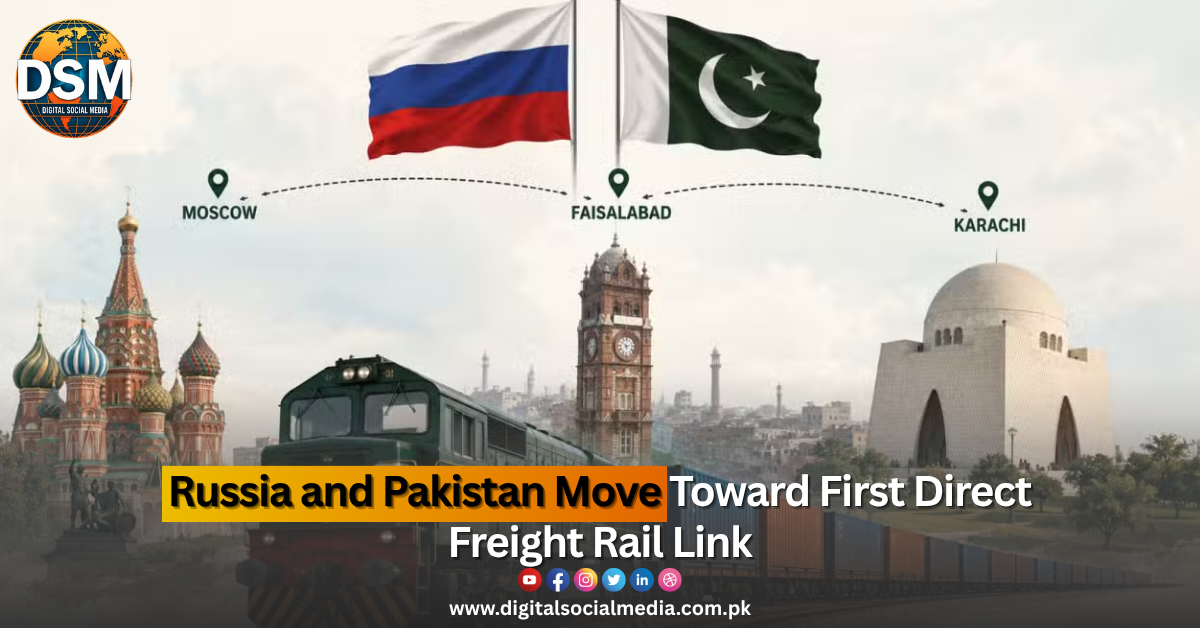
Russia and Pakistan to Launch First Direct Freight Rail Service
Russia and Pakistan are preparing to launch their first direct freight rail service, marking a significant development in trade and transport connectivity between the two countries. The proposed rail link is expected to create a new route for the movement of goods and strengthen economic ties between Pakistan, Russia, and the wider regional market.
The initiative comes as both countries continue exploring new opportunities to expand bilateral trade and improve transportation links. A direct freight railway could provide businesses with an additional logistics option while reducing reliance on longer or more complicated transportation routes.
New Chapter in Pakistan-Russia Trade
The launch of a direct freight service would represent an important step in the development of Pakistan-Russia economic relations. Both countries have been looking for ways to increase commercial cooperation, particularly in areas such as agriculture, energy, industrial goods, machinery, and other commodities.
Efficient transportation is essential for expanding international trade. A reliable rail connection can make the movement of large quantities of goods more practical and potentially improve the overall efficiency of cross-border commerce.
For Pakistan, the service could provide greater access to Russian markets while also opening additional opportunities to connect with Central Asian economies.
Improving Regional Connectivity
The proposed freight rail service is significant not only because of the connection between Pakistan and Russia but also because of its potential role in broader regional connectivity.
Pakistan occupies an important geographical position between South Asia, Central Asia, China, and the Middle East. Improved rail infrastructure can help the country strengthen its position as a regional trade and transit hub.
A direct rail connection with Russia could eventually contribute to the development of wider transportation corridors linking multiple markets.
Such connectivity could benefit exporters and importers by giving them more options for transporting goods across the region.
Benefits for Pakistani Businesses
Pakistani businesses involved in international trade could benefit from additional freight transportation options.
Railways are particularly useful for transporting large volumes of goods over long distances. A dedicated freight service could provide businesses with an alternative to road and sea transportation, depending on the nature and destination of the cargo.
Improved logistics could also help exporters plan shipments more efficiently and potentially reduce transportation-related challenges.
Industries involved in agriculture, manufacturing, textiles, engineering products, and other export-oriented sectors could eventually benefit from stronger regional connectivity.
Opportunities for Russia
The rail link could also provide Russian businesses with improved access to Pakistan and surrounding markets.
Pakistan has a large consumer market and is strategically positioned close to several growing economies. Greater transportation connectivity could make it easier for Russian companies to explore commercial opportunities in South Asia.
The development of new logistics routes can encourage businesses to consider markets that were previously more difficult or costly to reach.
Importance of Freight Rail
Freight rail plays an important role in international trade because it can transport large quantities of cargo efficiently across long distances.
Compared with individual road shipments, rail services can provide an organized method for moving bulk commodities and commercial goods.
For countries seeking to expand regional trade, investment in rail connectivity can therefore become an important part of their economic strategy.
The proposed Pakistan-Russia service could help demonstrate the potential of rail-based trade between South Asia and Eurasia.
Strengthening Economic Cooperation
The freight railway initiative also reflects broader efforts to strengthen economic cooperation between Pakistan and Russia.
Bilateral relations have increasingly included discussions around trade, investment, energy, agriculture, transportation, and regional connectivity.
Improved transportation infrastructure can support these objectives by making commercial exchanges more practical.
As trade volumes increase, efficient logistics will become increasingly important for both countries.
Potential Impact on Central Asian Trade
One of the most important long-term possibilities is the connection between Pakistan’s ports and Central Asian and Eurasian markets.
Pakistan has been seeking greater economic integration with landlocked Central Asian countries, while Russia remains an important economic market in the region.
A stronger rail network could eventually create new opportunities for transit trade and help Pakistan expand its role in regional supply chains.
This could also support efforts to improve connectivity between South Asia and Central Asia.
Challenges Ahead
Despite its potential benefits, establishing a direct international freight rail service involves several logistical and regulatory challenges.
Different railway systems, customs procedures, border controls, cargo standards, and transit arrangements must be coordinated between participating countries.
The success of the service will therefore depend on effective cooperation among railway authorities, customs agencies, logistics companies, and governments.
Reliable scheduling and competitive transportation costs will also be important for attracting commercial users.
Looking Ahead
The planned freight connection represents an important opportunity to strengthen Pakistan-Russia trade and improve regional transportation links.
If successfully implemented and expanded, the service could become part of a broader network connecting Pakistani businesses with markets across Eurasia.
For Pakistan, greater rail connectivity could support exports, transit trade, and economic diversification. For Russia, it could provide another route toward South Asian markets.
Conclusion
The proposed first direct freight rail service between Russia and Pakistan could mark a significant milestone in bilateral economic relations. By creating a new transportation route, the initiative has the potential to support trade, improve regional connectivity, and provide businesses with additional logistics opportunities.
As both countries work toward stronger commercial cooperation, efficient transportation infrastructure will remain an important foundation for expanding trade and building closer economic links across the region.