
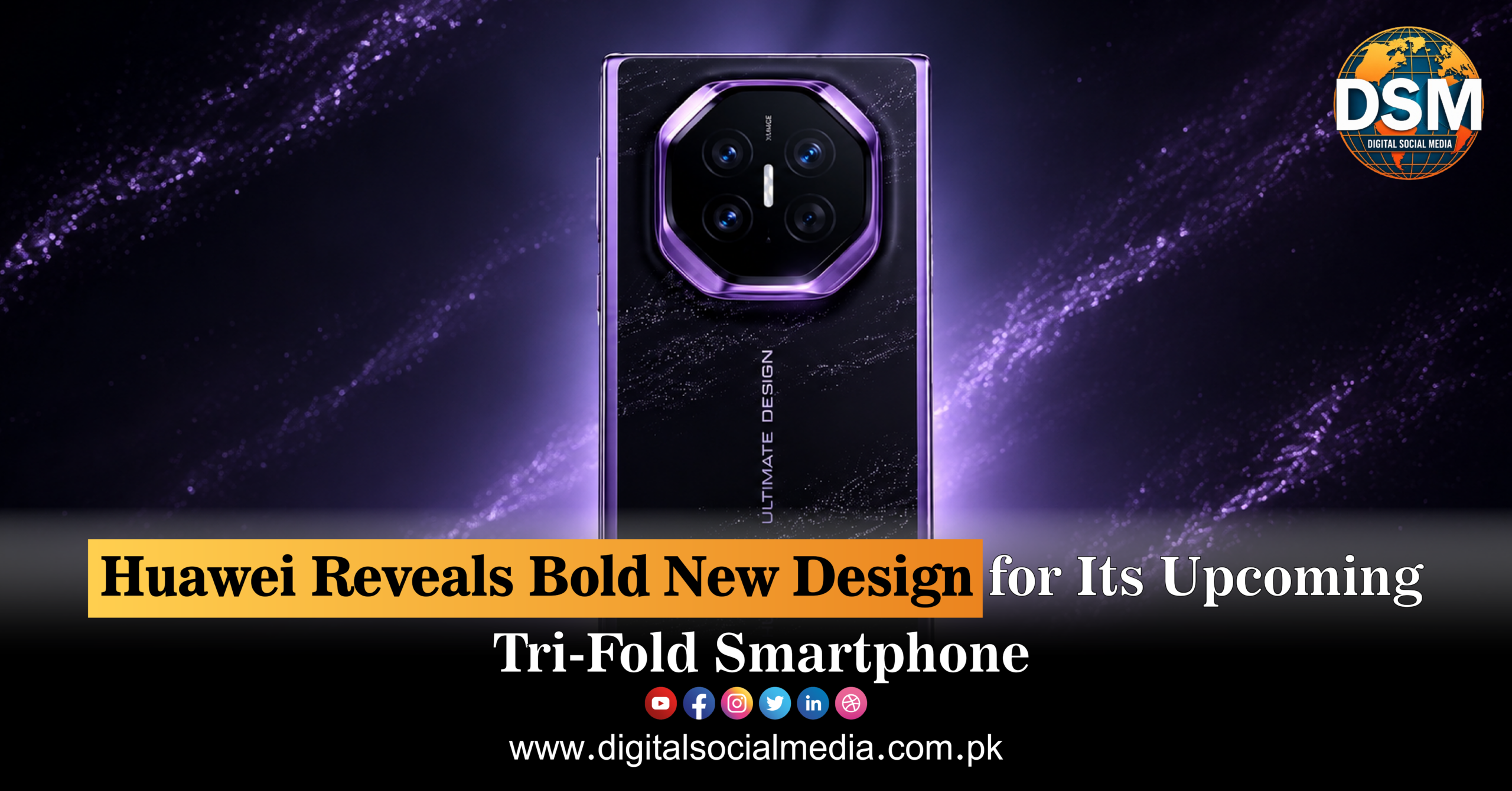
Huawei Reveals Bold New Design for Its Upcoming Tri-Fold Smartphone
Huawei has offered an early look at the design direction of its upcoming tri-fold smartphone, generating fresh excitement around one of the most ambitious categories in the modern mobile industry. The company’s latest design showcase highlights its continued focus on foldable technology as smartphone manufacturers search for new ways to combine portability, productivity, and large-screen experiences.
Tri-fold smartphones represent the next stage in the evolution of foldable devices. Unlike conventional smartphones, these devices use multiple folding sections to expand from a compact handset into a significantly larger display. The concept aims to give users the flexibility of a smartphone while providing screen space closer to that of a tablet.
Huawei has already established itself as one of the leading companies exploring advanced foldable smartphone technology. The new design for its upcoming tri-fold device suggests that the company remains committed to pushing the boundaries of mobile hardware.
A New Direction for Tri-Fold Design
The latest design reveal has attracted attention because tri-fold smartphones are still a relatively new product category.
Creating a device that can fold multiple times presents major engineering challenges. Manufacturers must consider hinge durability, screen flexibility, device thickness, weight, battery placement, and overall usability.
A successful tri-fold phone needs to feel practical both when folded and fully expanded.
Huawei’s new design direction appears focused on creating a premium and futuristic look while maintaining the functionality expected from a high-end smartphone.
The visual design of foldable devices is becoming increasingly important as manufacturers compete not only on specifications but also on how innovative and practical their products appear.
The Challenge of Building a Tri-Fold Phone
Traditional smartphones have relatively straightforward hardware structures compared with foldable devices.
Tri-fold phones require more advanced engineering because multiple sections of the device must move smoothly and reliably.
The hinge system is particularly important. It must support repeated folding and unfolding while keeping the display properly aligned.
The flexible screen must also be durable enough to handle regular use.
In addition, manufacturers need to manage internal components carefully because batteries, processors, cameras, cooling systems, and other hardware must fit into a device with several folding sections.
This makes tri-fold technology one of the most complex areas of smartphone engineering.
Bigger Screens Without Carrying a Tablet
The biggest advantage of a tri-fold smartphone is the ability to provide a much larger display while remaining portable.
When folded, the device can function as a smartphone for everyday tasks such as messaging, calls, browsing, and social media.
When expanded, the larger screen can provide more space for productivity and entertainment.
Users may be able to view multiple applications, edit documents, watch videos, play games, or browse websites on a more spacious display.
This flexibility could appeal to professionals, content creators, gamers, and users who want a larger screen without carrying a separate tablet.
Huawei’s Focus on Foldable Innovation
Huawei has continued investing heavily in foldable smartphone technology despite intense competition in the global mobile market.
The company has introduced several foldable devices over the years and has helped establish flexible displays as an important part of the premium smartphone industry.
The upcoming tri-fold model could strengthen Huawei’s position in this category.
By introducing new designs and form factors, Huawei is attempting to show that smartphones can continue evolving beyond the traditional rectangular design that has dominated the market for more than a decade.
Design and Practicality Must Work Together
A futuristic design alone will not guarantee success.
For tri-fold smartphones to reach a wider audience, manufacturers must ensure that the devices are comfortable, durable, and useful.
Weight and thickness are major concerns. A device with multiple folding sections could become too bulky if not carefully engineered.
Battery life is another important factor because larger displays generally consume more power.
Software optimisation will also be essential.
Applications must adapt smoothly when users move between folded and expanded modes. A seamless software experience could make the difference between a device that feels innovative and one that feels complicated.
Competition in the Foldable Market
The foldable smartphone market is becoming increasingly competitive.
Major technology companies are investing in flexible displays, improved hinges, thinner designs, and larger screens.
Huawei’s tri-fold strategy places the company in a particularly ambitious part of the market.
While conventional foldable phones typically open once, a tri-fold device offers an additional level of flexibility.
This could create new possibilities for multitasking and entertainment, although the higher level of engineering is also likely to make these devices premium products.
A Glimpse Into the Future of Smartphones
Tri-fold technology provides an interesting look at where smartphones may be heading.
Consumers increasingly use mobile devices for work, entertainment, photography, gaming, and communication.
As these demands grow, larger displays can offer advantages.
At the same time, users still want devices that fit comfortably into their pockets and bags.
Tri-fold phones attempt to solve this challenge by providing multiple form factors within one device.
Huawei’s new design showcase demonstrates that the company sees foldable technology as an important part of the future.
What Consumers Will Be Watching For
As Huawei prepares to reveal more information about its upcoming tri-fold smartphone, consumers will be interested in several important areas.
These include display quality, hinge durability, battery performance, camera technology, software features, weight, thickness, and overall pricing.
The ability of the phone to deliver a smooth experience in both folded and expanded modes will also be closely watched.
The success of tri-fold devices will ultimately depend on whether consumers believe the additional flexibility is worth the premium price.
Conclusion
Huawei’s new design reveal for its upcoming tri-fold smartphone highlights the company’s continued ambition in the foldable technology market.
By developing a device that can transform between multiple display sizes, Huawei is exploring new possibilities for mobile productivity and entertainment.
The road ahead will involve significant engineering challenges, particularly in durability, battery efficiency, software optimisation, and portability.
However, the tri-fold concept represents an exciting step forward for smartphone innovation.
As Huawei prepares to share more details, the technology industry will be watching closely to see how the company’s latest design translates into a finished product and whether tri-fold smartphones can become an important part of the next generation of premium mobile devices.