Peshawar BRT to Add 52 New Buses for Better Public Transport
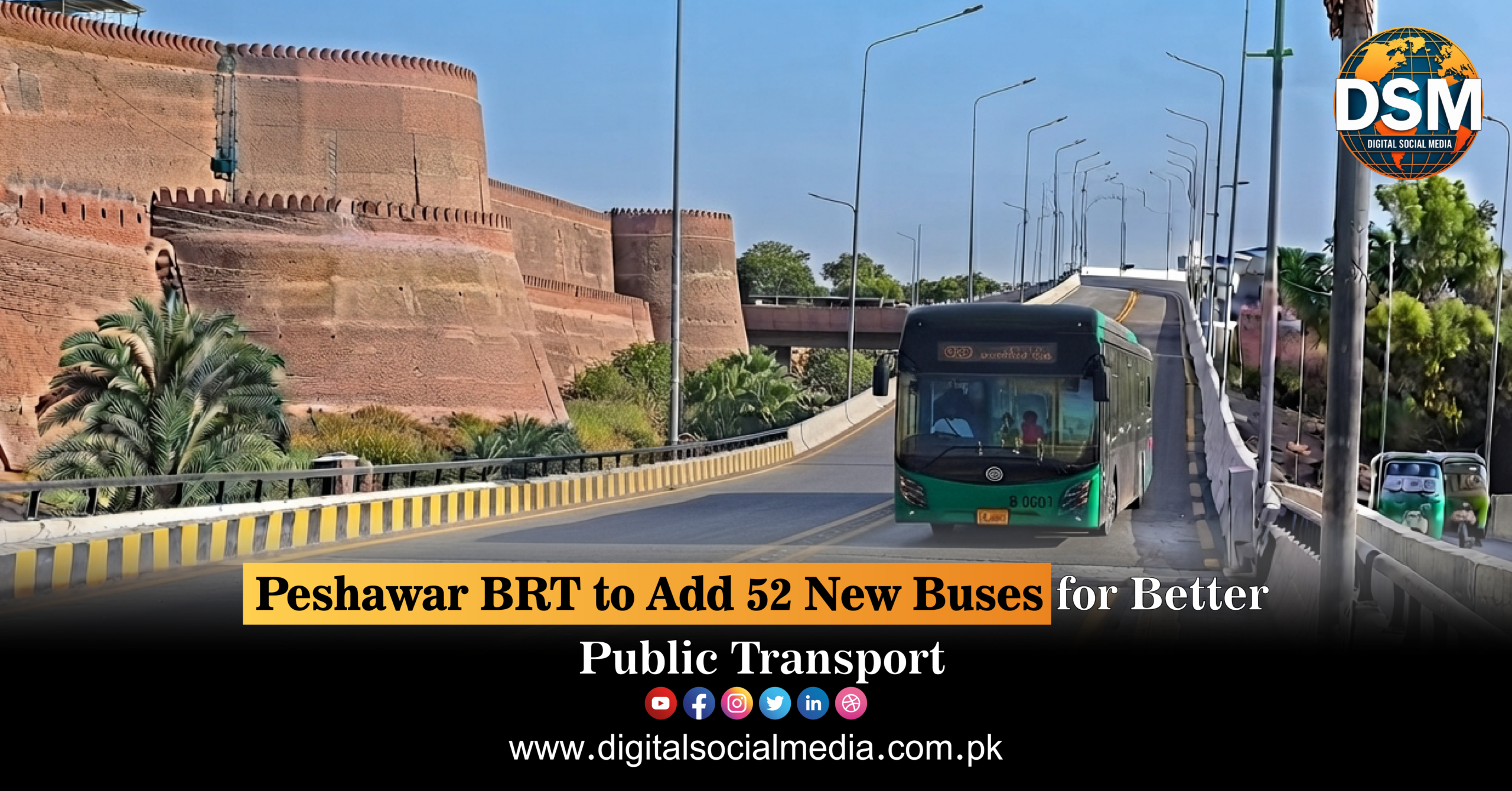
Peshawar’s public transport system is set for a major boost as the Peshawar Bus Rapid Transit (BRT) network prepares to add 52 new buses to its fleet. The expansion is expected to strengthen public transportation services and help meet the growing travel needs of commuters across the city.
The Peshawar BRT has become an important part of urban mobility in the provincial capital, providing residents with an organised and modern transport option. As passenger demand continues to grow, expanding the number of buses can help improve service availability and reduce pressure on the existing fleet.
The addition of 52 new buses reflects the importance of investing in efficient public transport infrastructure as Peshawar continues to expand.
Meeting Growing Passenger Demand
A modern city requires a reliable transport system capable of moving large numbers of people efficiently.
Peshawar has experienced increasing urban development, and more people travel daily for work, education, business, healthcare, and other essential activities.
Public transport plays an important role in connecting communities with major commercial areas, educational institutions, and employment centres.
The addition of new buses could help the BRT system accommodate more passengers and improve service during busy hours.
For regular commuters, increased fleet capacity may mean better availability and potentially shorter waiting times.
Strengthening Urban Mobility
The BRT system was developed to provide a more structured approach to public transportation in Peshawar.
Unlike conventional transport systems, Bus Rapid Transit is designed around dedicated infrastructure and organised routes that aim to improve the movement of passengers.
Efficient public transport can reduce dependence on private vehicles and provide commuters with an alternative that is more convenient and affordable.
Increasing the BRT fleet is therefore not only about adding vehicles. It is also connected to the wider goal of improving mobility within the city.
A stronger public transport network can help residents save time and make daily travel more predictable.
Benefits for Daily Commuters
The planned addition of 52 buses could directly benefit thousands of people who depend on public transport.
During peak travel periods, demand for buses can increase significantly. Students travel to schools and universities, employees commute to workplaces, and residents move across the city for business and personal needs.
A larger fleet can provide greater operational flexibility.
Transport authorities may be able to deploy additional buses where passenger demand is highest and improve service frequency on busy routes.
For commuters, a more reliable service can make a meaningful difference to everyday life.
Reducing Pressure on Existing Services
Public transport vehicles operate continuously throughout the day and experience significant wear over time.
Expanding the fleet can help distribute operational pressure across more vehicles.
It can also provide additional flexibility when buses require maintenance or temporary repairs.
A larger fleet allows transport operators to maintain service continuity without placing excessive pressure on individual vehicles.
Regular maintenance and proper fleet management will remain essential to ensuring that the new buses continue operating efficiently over the long term.
Environmental Importance of Public Transport
Public transportation can also contribute to more sustainable urban development.
When more people use buses instead of individual cars and motorcycles, the number of private vehicles required for daily travel can potentially be reduced.
This can help manage traffic congestion and support efforts to improve urban air quality.
Modern public transport systems can play an important role in developing cities that are more environmentally responsible.
As Peshawar continues to grow, investment in efficient mass transit can help create a more sustainable approach to urban mobility.
Supporting Economic Activity
Reliable transport is closely connected with economic development.
Workers need dependable travel options to reach their jobs, while businesses benefit when customers and employees can move efficiently around the city.
Students also depend on accessible transport to reach educational institutions.
By strengthening the BRT network, the addition of new buses could support a wide range of economic and social activities.
Better connectivity can help communities access more opportunities and reduce some of the difficulties associated with long daily commutes.
Technology and Modern Transport
Modern bus systems increasingly depend on technology to improve efficiency.
Digital ticketing, route management, passenger information systems, and fleet monitoring can help transport operators provide better services.
The continued development of the Peshawar BRT system could create further opportunities to improve the commuter experience through technology.
Passengers increasingly expect accurate information about routes and services, while transport authorities need reliable data to understand travel patterns and passenger demand.
Combining fleet expansion with effective technology and management can help create a stronger public transport system.
A Positive Step for Peshawar
The decision to add 52 new buses is a positive development for the city’s transport infrastructure.
However, expanding the fleet should remain part of a broader long-term strategy.
Infrastructure maintenance, staff training, passenger safety, route planning, and service reliability will all continue to play an important role.
Public transport systems must adapt as cities grow and travel patterns change.
Continued investment can help ensure that Peshawar’s transport infrastructure remains capable of serving residents effectively.
Conclusion
The planned addition of 52 new buses to the Peshawar BRT fleet represents an important step toward strengthening public transportation in the provincial capital.
The expansion has the potential to improve service availability, support growing passenger demand, reduce pressure on existing buses, and provide commuters with a more reliable travel experience.
Efficient public transport is essential for the future of rapidly growing cities.
For Peshawar, continued investment in modern transportation can support economic activity, improve urban mobility, and make daily travel easier for thousands of residents.
As the BRT network expands, commuters will be watching closely to see how the new buses improve capacity, service frequency, and the overall public transport experience across the city.